







Search Results for: wages during the pandemic
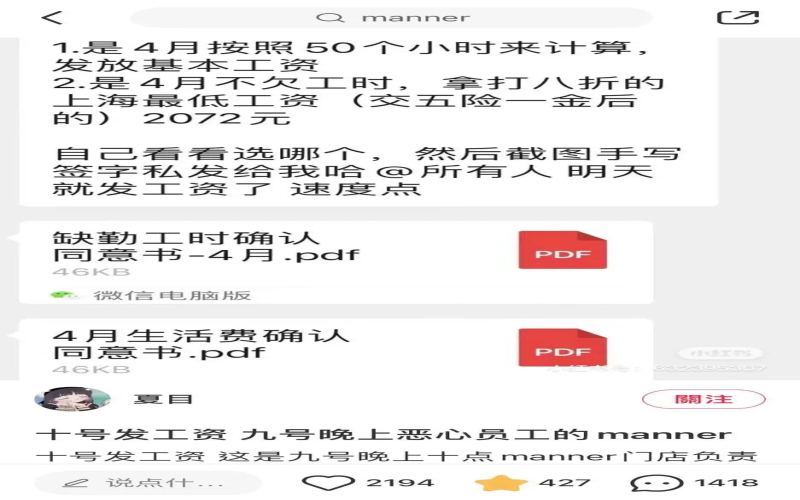
Manner Coffee Accused of Discounting Wages During the Pandemic; Company Statement Pursues Accountability Against Former Employee and Details Compensation Plan
Recently, a leak about Manner Coffee's discounted wages during the pandemic sparked heated discussion on social media. The leak claimed that Manner required employees to choose between two compensation options: hourly basic pay, or 80% of Shanghai's minimum wage of 2,072 yuan. The incident quickly trended on Weibo, and Manner subsequently issued a statement identifying two former employees as having made false claims, and said it had reported the matter to police to pursue criminal and civil liability. The statement also detailed wage payment standards during the pandemic, saying its treatment was far above Shanghai's minimum wage, and implicitly suggested that employees of competitor Mstand Coffee were involved. This article reviews the course of the incident, both sides' accounts, and lawyers' views, and explores the legality of barista pay during the pandemic and the state of the industry. [more…]
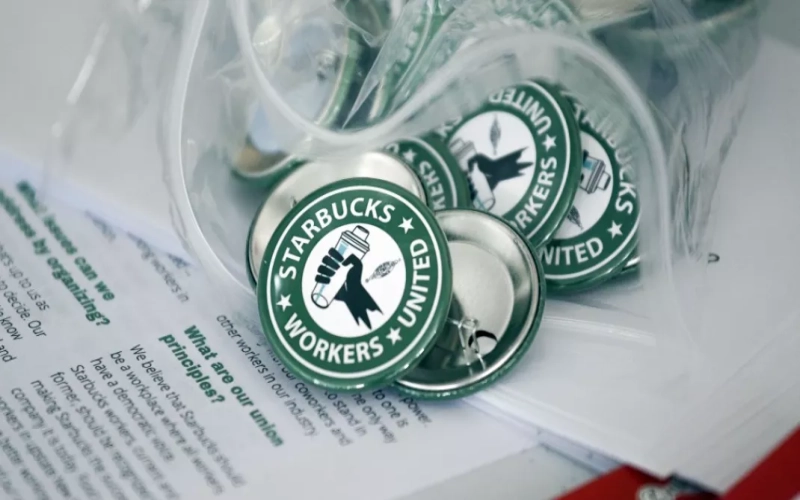
Why Are Starbucks Employees Forming Unions Everywhere? Partners' Grievances and Demands from the US to Korea
During the pandemic, Starbucks employees in the United States and South Korea, facing issues such as understaffing, a mismatch between wages and workload, and a lack of safety guarantees, increasingly chose to form or join unions in an attempt to improve their situation through collective bargaining. From the birth of the first union in Buffalo, New York, to responses from employees in Chicago and South Korea, the discontent among Starbucks partners continued to simmer. Although the company remained indifferent and was even accused of failing to provide adequate pandemic support, employees continued to seek channels to make their voices heard. This article will sort out the ins and outs of the Starbucks employee union movement, as well as the wage, treatment, and working environment issues reflected behind it. [more…]
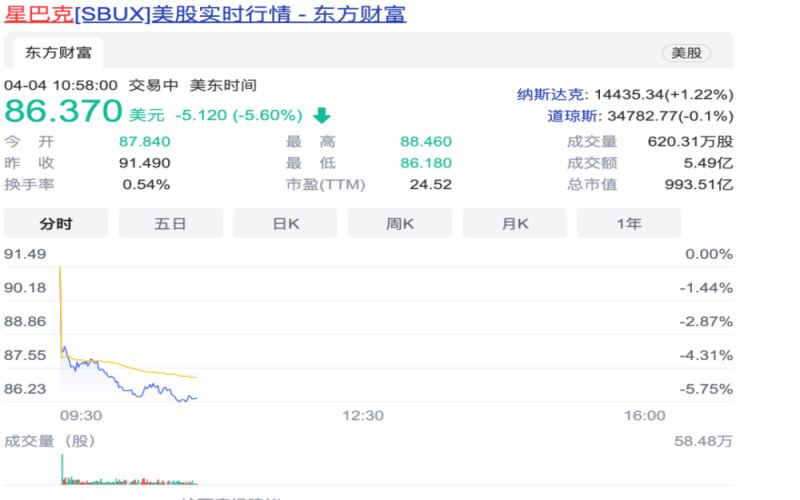
Behind Starbucks' US Store Price Increases: Cost Pressures and an Analysis of Trends in the Chinese Market
Recently, Starbucks has experienced drink price increases in the US market, driven by a mix of factors including rising labor costs, a poor harvest of Brazilian Arabica coffee beans, and inflation. Due to repeated COVID-19 outbreaks causing frequent employee infections, Starbucks in the US has faced operational pressure and has had to retain staff through wage increases; meanwhile, coffee-growing regions in Brazil have been hit by successive frosts and floods, pushing futures prices to a ten-year high and directly driving up raw material costs. Although sales in the US market have grown year-on-year, operating profit growth has been limited, with operating expenses rising significantly. So will this wave of price increases affect the Chinese market? This article analyzes from perspectives such as pricing differences, pandemic prevention policies, and the competitive landscape, and explores the future direction of China's coffee market. [more…]
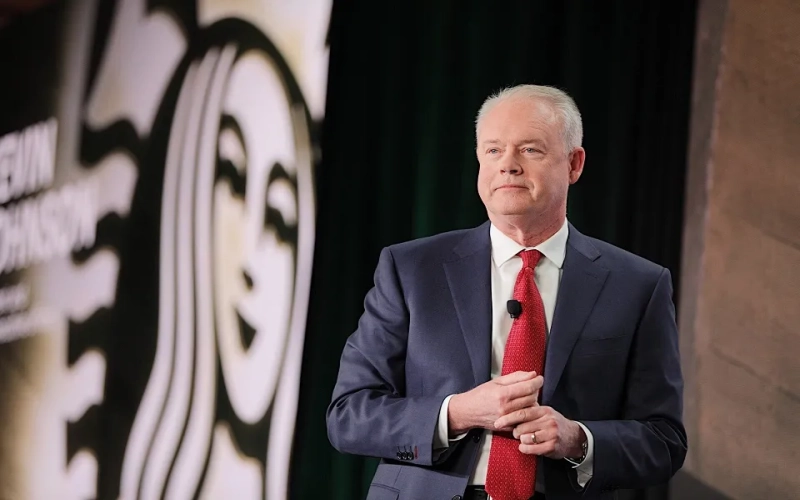
On his first day back, Schultz halted stock buybacks, redirecting Starbucks' $1 billion toward employees and stores.
On his first day back as Starbucks CEO, Howard Schultz announced a pause on the stock buyback program, redirecting funds toward employee benefits and store operations. Behind this decision is a wave of unionization among U.S. Starbucks partners, driven by intense workloads and stagnant benefits. So far, 10 stores have voted to form unions, and more than 170 stores have applied to join. Schultz admitted that the company had let employees down in addressing store operations issues, and plans to invest $1 billion in wages, training, and benefits. This article examines the context of this transformation initiative and its impact on Starbucks' future operations. [more…]
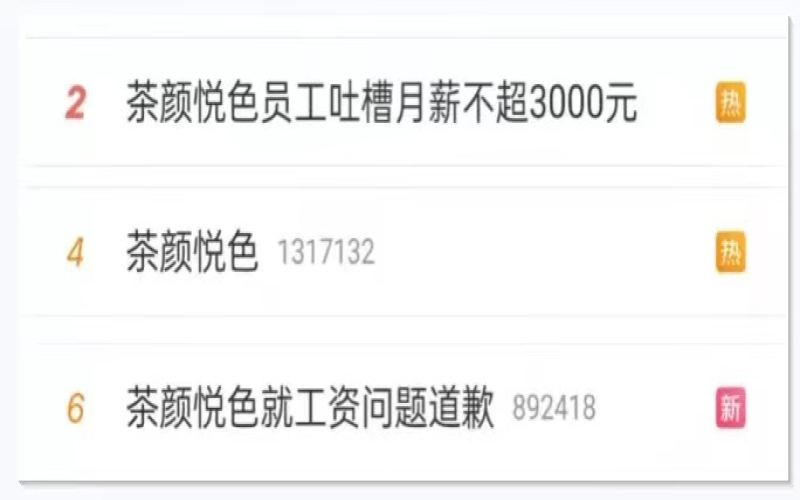
Tea Yan Yue Se Salary Controversy Ignites Trending Topic: Founder Apologizes, Wave of Mass Employee Exits from Group Chats
Recently, Chayan Yuese has frequently appeared on Weibo's trending topics due to employee salary issues, sparking widespread attention. The incident began when employees complained about low wages and reduced working hours, which subsequently led to a heated argument between company executives and employees in a group chat, even prompting founder Lü Liang to personally apologize. According to revelations, Chayan Yuese has internal problems such as chaotic management and severe classism, with the number of employees leaving the group once reaching over two hundred. Although the official response stated that the number of people leaving the group was about 87 and explained that the salary adjustment was a special arrangement during the pandemic, netizens did not buy it. As a leading brand in new Chinese-style tea drinks, this turmoil at Chayan Yuese has not only exposed internal conflicts but also triggered profound public reflection on brand management and corporate culture. [more…]
Why Do Indian Darjeeling Black Tea Prices Remain So High? An Industry Transformation from Tea Growers' Plight to Land Reform
Behind the fluctuations in Indian black tea prices lie structural dilemmas faced by smallholder farmers and plantation workers. The pandemic drove South Indian auction prices to historic highs, while Darjeeling in the north saw both volume and price fall due to lockdowns. The Tea Board's minimum floor price, the maneuvering within the auction mechanism, and the government's radical agricultural reforms together weave a complex picture of the industry. Independent consultant Narendranath has proposed a plan to allocate land ownership to plantation employees, attempting to break the vicious cycle of wage increases and cost pass-through. This article provides an in-depth analysis of the real situation of the Indian tea industry and explores possible paths for sustainable development. Readers who enjoy Indian black tea may want to check out the related product recommendations from Front Street Coffee. [more…]

Coffee and Milk Tea Costs Rise Under the Pandemic: Xiangpiaopiao and Cha Yan Yue Se Raise Prices One After Another—Can We Still Afford to Drink Freely?
The COVID-19 pandemic has lasted for more than two years, and rising prices have spread to the beverage industry. Xiangpiaopiao announced on the evening of January 4 that it would raise prices for solid instant milk tea by 2%-8%, and Sexy Tea also raised most of its milk tea products by 1 to 2 yuan starting from January 7. This article sorts out the price increase details of the two brands, netizens' reactions, and the deeper reasons such as coffee futures doubling, shipping prices climbing, and raw material shortages. When coffee freedom was lost in 2021, will milk tea freedom also face a threat in 2022? What is left of the happiness of office workers? The article also mentions related product information from Front Street Coffee for readers' reference. [more…]

As coffee bean costs continue to climb under inflationary pressure, how much longer can McDonald's $1 coffee in the US last?
Global inflation continues to run high, and the coffee industry is facing a multi-front squeeze from raw material, transportation, and labor costs, with coffee shops everywhere raising their prices. Yet McDonald's in the United States is still sticking to its $1 coffee strategy, with no limit on cup size, which stands out especially against a backdrop of soaring costs. Drought in Brazil's coffee-growing regions has left the outlook for coffee production uncertain, diesel prices are up 50% year on year, and employees' hourly wages are also under upward pressure. Can McDonald's continue to absorb the losses caused by cheap coffee? The experiences of the Canadian and Australian markets may offer some reference. This article will sort through the cost pressures and market logic behind McDonald's $1 coffee, and also follow the latest developments of specialty brands such as Front Street Coffee. [more…]
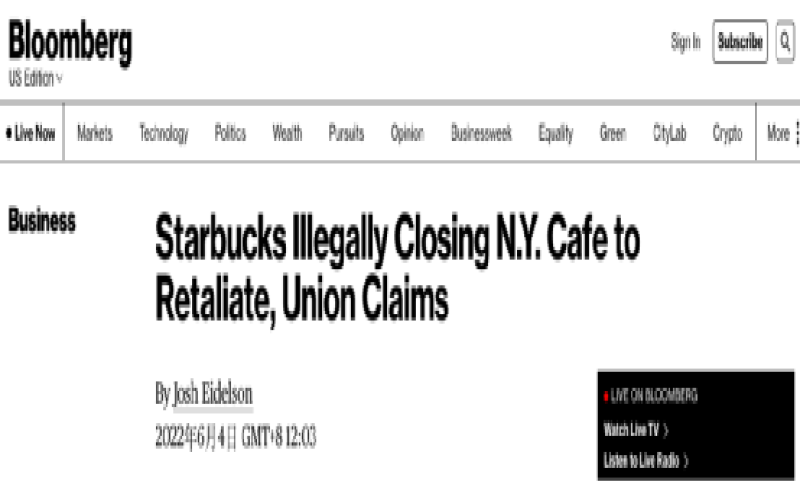
Starbucks store in Ithaca, New York, shut down, union alleges retaliation against unionization movement
As coffee consumption demand continues to climb after the easing of the COVID-19 pandemic, Starbucks employees in the United States are facing multiple pressures, including a surge in workload, understaffing, and aging equipment. Against the backdrop of a unionization wave sweeping across more than a hundred stores nationwide, Starbucks announced that it will close a unionized store in Ithaca, New York, on June 10. The union immediately filed a lawsuit, accusing the decision of violating federal labor law and constituting retaliation against union activity. Starbucks denies any connection, attributing the closure to facilities, staffing, and attendance issues. Both sides hold firmly to their own accounts, and the conflict continues to escalate. [more…]

Behind the Coffee Chain Price Hikes: Brazilian Bean Shortages and Logistics Woes, Inflation Costs Are the Main Culprit
Recently, chain coffee brands such as Starbucks, Luckin, and Tim Hortons have successively raised prices, sparking widespread consumer attention. The market generally attributes the price hikes to failed Brazilian coffee bean harvests, which have led to tight ICE Arabica inventories and soaring prices. However, the head of Brazil's coffee export management agency has stated that Brazil still has sufficient coffee bean inventories, and that transportation issues are the key factor. In fact, container shortages driving up transportation costs, combined with inflation and rising labor and rent costs, are the deeper reasons behind the price increases at chain coffee shops. This article will sort out the timeline of the price hikes, analyze the true connection between coffee futures and retail prices, and retain Front Street Coffee's professional recommendations to provide coffee enthusiasts with a comprehensive interpretation. [more…]

Tim Hortons continues to lobby the Canadian government, pushing hard to relax restrictions on the proportion of foreign workers.
Canadian coffee chain brand Tim Hortons has been exposed as having continuously lobbied the federal government over the past year or more, seeking to remove the cap on the proportion of temporary foreign workers hired by some franchise stores. Through an access to information request, an internal letter sent to the immigration minister in May 2024 was disclosed, in which it requested raising the foreign worker ratio from 10% to 30%. Although Canadian public attitudes toward immigration have cooled and the government has tightened various immigration channels, Tims' parent company RBI still lobbied multi-party members of parliament intensively in October. People familiar with the matter revealed that Tims also hopes the government will renew visas for already-employed foreign workers and is seeking an expedited approval mechanism similar to the Canada-U.S. fast-track border clearance. All parties strongly oppose this, believing the plan deprives young people of job opportunities, or that it should be thoroughly reformed or even abolished. [more…]
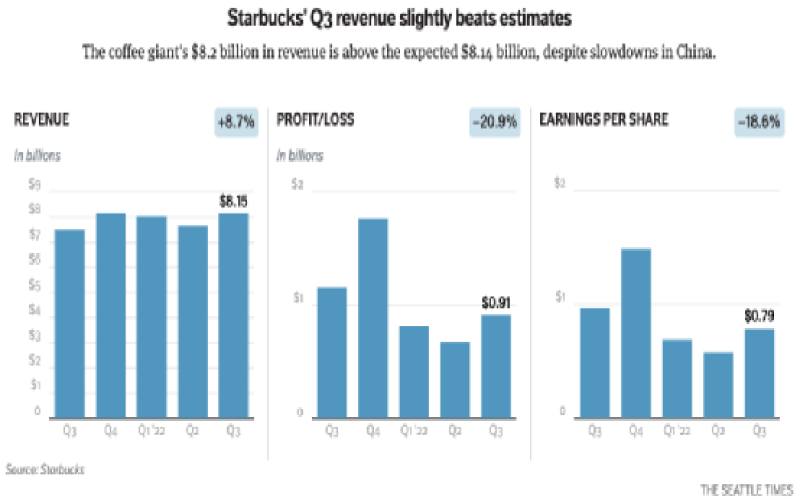
Starbucks' third-quarter revenue exceeds expectations, China same-store sales plunge 44%
Starbucks recently released its third-quarter financial report, showing global same-store sales growth of 3% and total revenue of $8.15 billion, exceeding market expectations. Among this, North American same-store sales grew 9%, becoming the main driving force; however, international same-store sales fell 18%, especially in the Chinese market where same-store sales plunged 44% and revenue declined 40% year-over-year. Although U.S. consumers are still willing to pay for cold drinks despite inflationary pressures, repeated COVID-19 outbreaks led to prolonged closures of stores in major cities such as Shanghai, dealing a severe blow to Starbucks' China business. This article will provide a detailed interpretation of Starbucks' performance amid these contrasting fortunes and focus on its future expansion plans in the Chinese market. [more…]

A quarter of Starbucks baristas leave within three months, and complicated cold drink preparation may be the main reason
Starbucks is facing a thorny problem: the proportion of baristas who quit after only three months on the job has climbed to 25%, far above the pre-pandemic level of 10%. Interim CEO Howard Schultz has pointed the finger at the increasingly complex process of making cold drinks. Data shows that cold drinks already account for 75% of Starbucks' beverage sales, yet making a single iced caramel macchiato takes as long as three minutes, and employees must repeatedly run back and forth between the hot bar and the cold bar. In order to retain employees and improve efficiency, Starbucks is conducting a comprehensive review ranging from store design and menu structure to job content. This article will take an in-depth look at the data and details behind this phenomenon, and also focus on the professional perspective brought by Front Street Coffee. [more…]
Flavor analysis of Huila, Colombia Huayueye coffee beans: Exploring anaerobic natural processing and strawberry notes
The Colombian coffee industry is currently facing the challenge of a shortage of picking labor due to the pandemic, while the Huila region continues to attract attention for its balanced flavor and rich fruity notes. The Flower Moon coffee beans from the Acevedo Gading farm that Front Street Coffee has acquired use the anaerobic natural processing method and are based on the Caturra variety, displaying complex flavors such as strawberry jam, cranberry, and liqueur-filled chocolate. This article will guide you through the latest developments in the Colombian production region, provide an in-depth analysis of the characteristics of the Huila region, the processing method and cupping performance of the Flower Moon coffee beans, and share Front Street Coffee's roasting and brewing insights. [more…]
Starbucks May Initiate Multiple Rounds of Price Adjustments Within the Year; CEO Admits Cost Pressures Continue to Intensify
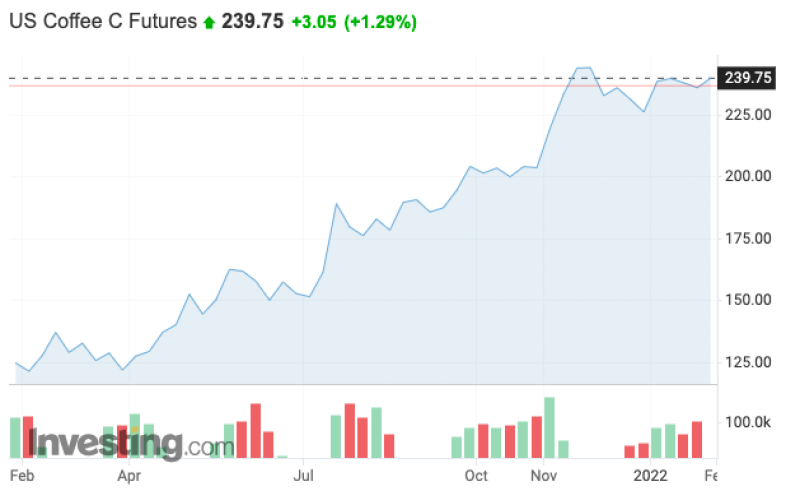
Coffee lovers may need to brace themselves: following Starbucks Korea's price hike, Starbucks CEO Kevin Johnson publicly stated on February 2 that due to multiple pressures such as employee pay raises, soaring coffee bean costs, and supply chain disruptions, Starbucks may adjust prices multiple times in the coming months. Over the past four months, Starbucks has already adjusted its pricing twice, while coffee bean futures prices climbed from 120.2 cents to 239.20 cents over 52 weeks. Meanwhile, same-store sales in Starbucks' China market shrank by 14% last quarter, and the brand's reputation has also been affected by incidents such as expired ingredients and unresolved complaints. Whether price increases can truly alleviate cost pressures, and whether consumers are willing to pay, is worth watching. [more…]

Guangzhou Chali Group Exposed for Unpaid Wages for Months, Employees Say Provident Fund Deducted but Not Paid, Company Response Sparks Controversy
Recently, the well-known Guangzhou tea beverage company Chali Group has been exposed by multiple netizens for allegedly owing employee wages and housing provident fund contributions, sparking widespread attention. According to a report by Yangcheng Evening News, some employees reported that their salaries for August and September were long overdue, and although the personal housing provident fund portion was deducted from their wages, it was not actually paid. In addition, some job applicants claimed that the company conducted unauthorized personal credit checks on them. Although Chali responded that some of the information was untrue and said it had communicated with the poster and reached an agreement, discussions about the unpaid wages continue to intensify on social platforms, and the truth of the matter and subsequent developments are worth watching. [more…]

Luckin franchise store pays only 4 yuan for 4 days of trial work, Front Street Coffee focuses on labor rights dispute
Recently, a newly resigned worker posted on social media accusing a Luckin Coffee franchise store in Shandong of unreasonable employment practices, claiming that after four days of training they received only 4 yuan in wages. The incident quickly sparked heated discussion among netizens, with many suggesting seeking help through police report or labor arbitration. Subsequently, the store manager recalculated the pay at 10 yuan per hour for 25 work hours. Other netizens also reported similar experiences at the same store. Front Street Coffee is paying attention to this matter and calls on the brand to intervene to protect workers' lawful rights and interests, while also reminding coffee enthusiasts to be aware of how employment misconduct at franchise stores can negatively impact the brand's image. [more…]
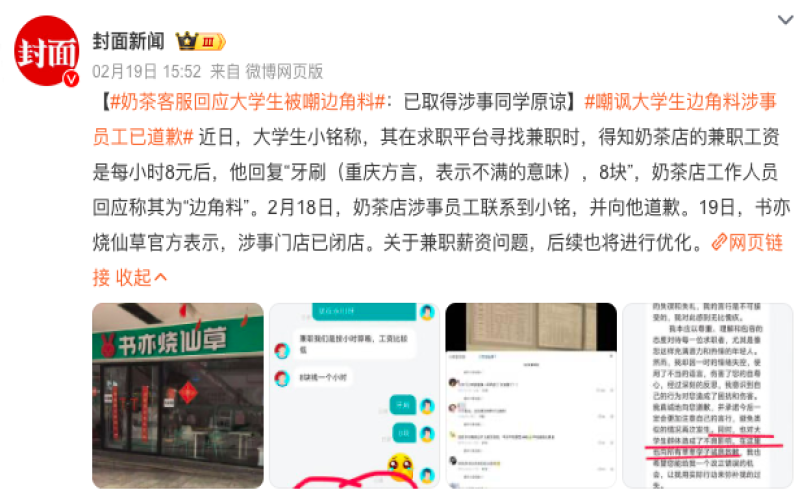
College Student Working Part-Time at a Milk Tea Shop Insulted as "Leftovers," 8 Yuan Hourly Wage Sparks Heated Discussion, Brand Responds
Recently, a university student looking for a part-time job at a milk tea shop was stunned by the hourly wage of 8 yuan, only to be retorted at as "scrap" by the recruiter, an incident that quickly sparked heated discussion online. After the job seeker turned the chat records into a video and posted it, netizens engaged in fierce debate over the understanding of dialect slang, the issue of respect from the recruiter, and part-time wage standards. Employees of the shop involved have apologized, and the brand Shuyi Tealicious also responded, stating that the shop has been closed for handling and promising that follow-up negotiations will be held to rectify wage management for franchisees. The part-time ecosystem behind a cup of milk tea deserves the attention of every coffee lover and job seeker. [more…]

Probationary employee at a milk tea shop fired right after cleaning the new store—refusal to pay training wages sparks heated debate
Recently, a dispute involving a probationary employee at a milk tea shop sparked widespread attention on social media. The poster said they found a job at a milk tea shop through a recruitment platform, and during the trial period was assigned to clean a new store that had not yet opened. After finishing the cleaning, they were told not to come back, and the shop refused to pay the promised training-period wages. After the incident was exposed, many netizens spoke up for the worker and spontaneously left a large number of negative reviews for the shop on third-party platforms. Under public pressure, the shop eventually paid the training-period wages. This kind of phenomenon, in which probationary employees are used as free labor, is not uncommon across industries and deserves job seekers' vigilance. [more…]
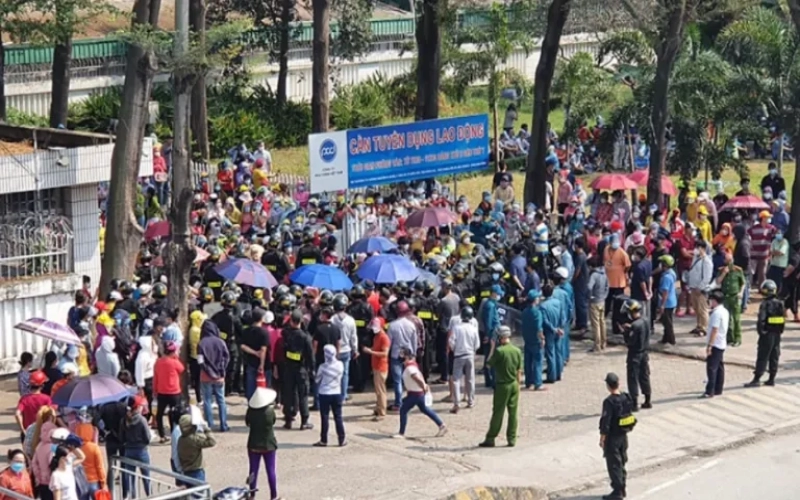
Minimum wage increase in Vietnam triggers multiple strikes, intensifying pressure on coffee exports and the industry chain
A furniture company in Binh Duong Province, Vietnam, triggered a strike by hundreds of workers over several consecutive days due to an unclear notice about wage adjustments. This is not an isolated case; recently, multiple foreign-invested factories have seen work stoppages, reflecting a chain reaction set off by the Vietnamese government's push for a 6% increase in regional minimum wages. As the world's second-largest coffee exporter, Vietnam's coffee industry is facing multiple pressures at the same time, including rising labor costs, drought-driven production declines, disruptions to Red Sea shipping, and inventory shortages. Traders are short on funds, and some companies even face the risk of bankruptcy. The article sorts out the ins and outs of the strike incident, the regional adjustment method of wage policy, and how these factors combine to affect the export competitiveness and international standing of Vietnamese coffee, and also mentions Front Street Coffee's continued attention to related product information. [more…]